Women Leave Molotschna
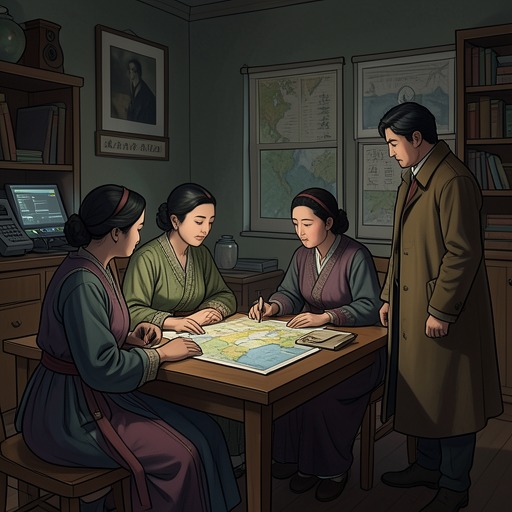
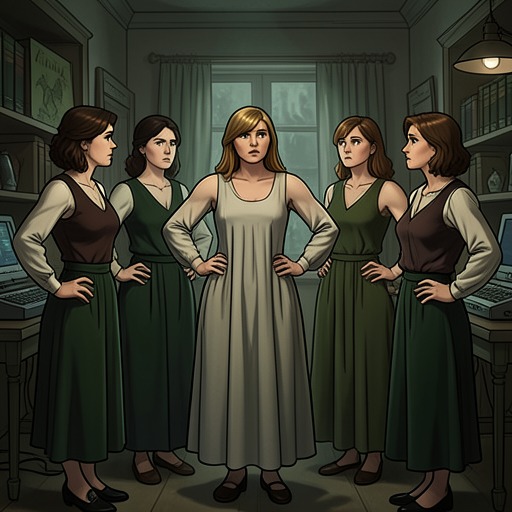
Women TalkingWomen Leave Molotschna is the women’s departure from the colony after they are told that forgiving the imprisoned attackers is the condition for keeping their place there. The journey is a chosen response to danger and an imposed threat of exile at once: the women decide when to leave and prepare for the road, but their decision is made under a two-day deadline and with little knowledge of the world beyond Molotschna Colony.
Causes and Decision
The immediate pressure comes from the men’s return. The remaining men of Molotschna Colony, apart from those described as senile or decrepit and August Epp, have gone to the city to post bail for the imprisoned attackers. They hope the accused men can return to the colony while awaiting trial. Peters tells the women that, once the men return, they will have the opportunity to forgive them, an act presented as securing everyone’s place in heaven. If they refuse, Peters says, it is the women who must leave for an outside world they know nothing about. The women have only two days to organize an answer to this ultimatum.
The terms make departure more than a matter of preference. The women are being asked to absorb the consequences of the men’s return, while refusal puts their own belonging in question. In this context, the declaration that there are no cons to leaving is a position taken in the women’s deliberation, not proof that the road ahead is safe or familiar. The choice retains its difficulty even as the women reject the alternative imposed on them.
Planning the Departure
The decision becomes a specific plan rather than an abstract resolution. One woman asks whether the group agrees to leave that night after dark, so that they will not be seen while passing the Chortiza Colony and Hiakjeke Colony. Darkness and the proposed route show how much the departure depends on avoiding notice; the plan is not a public procession but a movement coordinated around the risk of being observed.
August Epp prepares materials for the journey. He wraps a map around a large block of cheese and covers it with ordinary brown paper, concealing a tool for finding the way among food and unremarkable packaging. The Co-op Safe is placed in the back of Greta Loewen’s buggy, beneath the back seat. August also packs onions, soap, and pieces of wood, the last intended either to provide traction if the wheels become mired in mud or to kindle a fire. These provisions give the departure a practical scale: the women are preparing not only to set out but to cope with obstacles on the road. August notices Ona Friesen’s approval of his preparations, a small sign of accord within a plan on which the group must rely.
The movement also involves placing children together. Agata Friesen directs Nettie/Melvin to return to them and wait in the fallow field beside the Molotschna schoolhouse. This instruction locates the children in relation to the gathering point without suggesting that the departure is an unplanned rush. The women are arranging people as well as supplies, making the field and the buggies part of a coordinated departure.
Preventing Disclosure and Taking Aaron
The plan faces the danger that it will be reported. Salome Friesen tells August Epp that she has made the Koop brothers unconscious with Belladonna Veterinary Spray. She had instructed Autje Loewen and Neitje Friesen to draw them to the loft by promising intimacy and to make enough noise for her to enter without being detected. With the brothers unable to go to the city and inform on the women, Salome’s action removes an immediate threat to the secrecy of the departure. The episode shows the women’s preparations extending beyond route and provisions to control over who can expose their plans.
Salome has also found Aaron and placed him in a buggy, where he is waiting. She explains that he cannot remain in the colony and compares taking him away to carrying a sleeping child from a burning house. Her decision ties the collective departure to the protection of her son: leaving is not only a group’s answer to Peters’s threat but also a means of removing a child from a place Salome considers unsafe. The evidence does not describe what awaits them after departure; it establishes only that she will not leave Aaron behind.
Departure and Significance
The departure takes visible form in the convoy gathering behind the Molotschna schoolhouse. From a window, August Epp sees Salome Friesen running away from the barn and catches sight of the buggies lining up. The view brings together the hurried individual movement and the larger collective arrangement: Salome is returning from an action that helped secure the plan, while the vehicles assemble for the journey. The intended departure after dark and the convoy’s formation mark the transition from debate to action.
The episode’s practical details resist any simple picture of escape as either effortless liberation or mere expulsion. The women face an ultimatum, uncertainty beyond the colony, and the possibility that their plans will be exposed; they answer by choosing a time, considering a route, concealing a map, packing for mud and fire, gathering the children, and taking Aaron along. Their agency appears in the organization of departure, even as the threat that drives it limits the choices available. The convoy’s assembly is therefore both an ending to the women’s deliberation and the beginning of an uncertain movement away from the place that has made forgiveness the price of staying.